In the special vehicle industry, hydraulic supporting systems play a critical role in vehicle stability, safety, and operational efficiency. From tail lifts and recovery trucks to firefighting vehicles and mobile service units, a reliable supporting system is not an optional accessory—it is a core functional component.
As a Hydraulic Supporting System Manufacturer with deep expertise in hydraulic systems and complete vehicle solutions, Cadro delivers OEM-focused, application-driven hydraulic supporting systems designed for global brands, wholesalers, and vehicle manufacturers.
This guide goes far beyond basic product descriptions. It provides engineering insights, selection guidance, and OEM manufacturing considerations—helping procurement managers and technical teams make confident, informed decisions.
A hydraulic supporting system is designed to stabilize a vehicle during stationary operations by transferring load from the chassis to the ground. Unlike mechanical or manual supports, hydraulic systems provide higher load capacity, faster deployment, and improved safety.
* Prevent vehicle tilting or rolling
* Distribute weight evenly during loading/unloading
* Enhance operator safety
* Protect chassis and hydraulic components
* Ensure compliance with operational safety standards
In high-load or uneven terrain scenarios, the performance of the supporting system directly impacts vehicle lifespan and user safety.

As an experienced Hydraulic Supporting System Manufacturer, Cadro designs systems tailored for multiple vehicle types:
* Tail lift trucks
* Breakdown and recovery vehicles
* Firefighting and emergency vehicles
* Mobile cranes and service trucks
* Utility and municipal vehicles
Each application has unique load, stroke, and control requirements, making standardized off-the-shelf solutions insufficient for many OEM projects.
Understanding system types is essential for correct specification and long-term reliability.
* Designed for dedicated vehicle configurations
* Optimized for high load capacity
* Simple structure with low maintenance needs
* Compact when retracted
* Ideal for vehicles with limited installation space
* Adjustable height for uneven ground
* Flexible deployment angles
* Suitable for multi-functional special vehicles
* Often integrated with advanced control systems
As a professional Hydraulic Supporting System Manufacturer, Cadro supports custom combinations based on vehicle layout and operational needs.
Many competitor articles focus only on product appearance. However, from an engineering and procurement perspective, performance lies beneath the surface.
* Load capacity and safety factor
* Cylinder bore and stroke design
* Material selection (high-strength steel, corrosion resistance)
* Seal system reliability
* Hydraulic circuit stability
* Surface treatment and coating performance
Cadro designs each system with real operating conditions in mind, not just laboratory specifications.

Most existing articles—including typical online product listings—fail to address:
* How systems perform under dynamic loads
* Long-term durability in harsh environments
* OEM integration challenges
* Compliance with international vehicle standards
* After-sales and lifecycle support
As a Hydraulic Supporting System Manufacturer focused on OEM cooperation, Cadro closes these gaps through engineering validation, testing, and documentation.
OEM customers require more than a catalog product.
* Custom load ratings and stroke lengths
* Vehicle-specific mounting interfaces
* Integrated hydraulic control logic
* Compatibility with existing hydraulic systems
* Brand-specific surface finishes and markings
This OEM flexibility allows global partners to reduce redesign costs and shorten time to market.
A reliable Hydraulic Supporting System Manufacturer must demonstrate measurable quality assurance.
* Precision CNC machining for critical components
* 100% pressure and leakage testing
* Fatigue testing under simulated load cycles
* Strict supplier qualification for seals and raw materials
* Full traceability for OEM orders
This ensures consistent performance across large production volumes.
One of Cadro's key advantages is not just manufacturing components—but delivering system-level solutions.
* Reduced compatibility risks
* Optimized hydraulic efficiency
* Simplified installation for vehicle manufacturers
* Improved system reliability
By working with a Hydraulic Supporting System Manufacturer that understands complete vehicle hydraulics, OEM partners gain a significant engineering advantage.
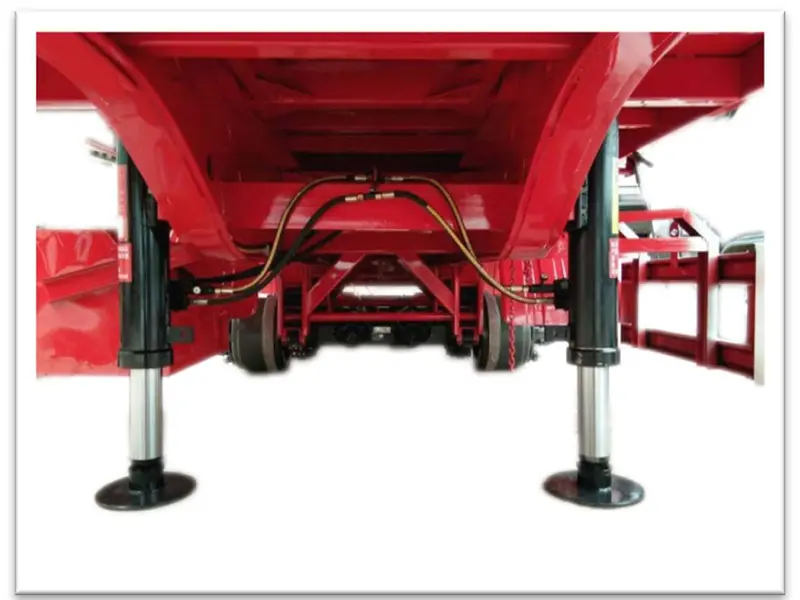
When sourcing hydraulic supporting systems for OEM or wholesale projects, consider the following:
1. Industry experience in special vehicles
2. Engineering and customization capability
3. Quality control and testing standards
4. OEM communication efficiency
5. Long-term supply stability
Cadro aligns with all five criteria—making it a trusted partner for global customers.
If you are looking for a Hydraulic Supporting System Manufacturer that understands OEM requirements, engineering realities, and global market expectations, Cadro is ready to support your next project.
Contact Cadro today to discuss your hydraulic supporting system specifications and OEM cooperation needs.
Hydraulic supporting systems are widely used in tail lift trucks, recovery vehicles, firefighting vehicles, and mobile service units.
Yes. Cadro provides full OEM customization including load capacity, stroke length, mounting design, and control integration.
Material quality directly affects load performance, corrosion resistance, and service life—especially in harsh environments.
Key features include overload protection, stable hydraulic circuits, reliable sealing systems, and secure ground contact design.
Specialized manufacturers understand real vehicle applications, regulatory requirements, and long-term operational challenges.
Cadro is a professional Hydraulic Supporting System Manufacturer providing OEM-focused, engineering-driven solutions for special vehicles. Discover system types, applications, customization options, and how to choose a reliable hydraulic partner.
Container liquid cooling solutions are essential for modern computing environments, offering superior efficiency, energy savings, and scalability. These systems enhance the performance and reliability of data centers, high-performance computing, and energy storage applications. As technology evolves, the demand for effective cooling solutions will continue to grow, making liquid cooling a critical component of future infrastructure.
This article explores how to identify the best container liquid cooling solution manufacturers for your needs. It discusses the benefits of liquid cooling, key factors to consider when choosing a manufacturer, and highlights leading companies in the industry. Additionally, it addresses future trends in liquid cooling technology, providing insights for organizations looking to optimize their cooling solutions.
This article explores best practices from leading manufacturers in container liquid cooling solutions, highlighting the benefits of liquid cooling, key players in the market, and essential implementation strategies. It emphasizes the importance of regular maintenance, monitoring, vendor collaboration, and staff training while discussing future trends in the industry.
This article explores the leading container liquid cooling solutions manufacturers in 2025, highlighting Shenzhen Cadro's market leadership. It discusses the benefits of liquid cooling, key features, types of systems, and future trends shaping the industry, emphasizing the importance of efficiency, modularity, and sustainability in modern cooling solutions.
This article analyzes the cost and efficiency of container liquid cooling solutions compared to traditional HVAC systems. It highlights the advantages of liquid cooling in terms of energy efficiency, operational costs, and environmental impact, while also discussing the initial investment and scalability of both systems. As data centers evolve, the trend towards more efficient cooling solutions is becoming increasingly important.
This article provides a comprehensive overview of hydraulic supporting systems, detailing their components, operation, and applications across various industries. It offers essential considerations for buyers, including load capacity, operating environment, and maintenance requirements, ensuring informed purchasing decisions.
This article explores the latest innovations in wheelchair lift design for special vehicles, highlighting advancements in technology, safety features, and user-centered design. It discusses the importance of customization and the potential future trends, including autonomous lifts and sustainable practices, that aim to enhance accessibility for individuals with mobility challenges.
Hydraulic technology is transforming wheelchair lifts, enhancing accessibility for individuals with disabilities. These lifts provide smooth operation, high load capacity, and essential safety features. Innovations in control systems and energy efficiency further improve user experience. By promoting independence and supporting caregivers, hydraulic wheelchair lifts play a vital role in creating inclusive environments.
This article explores how CADRO enhances the quality of air bag dock levelers through advanced manufacturing techniques, including precision engineering, high-quality materials, and smart technology. The benefits of these innovations include increased efficiency, reduced maintenance costs, and enhanced safety features, making CADRO a leader in the logistics equipment industry.
This article discusses the safety standards that manufacturers of dock levelers must comply with, focusing on OSHA and ANSI regulations. It highlights the importance of safety features, employee training, and regular maintenance to prevent accidents and ensure compliance. The article also addresses challenges manufacturers face in maintaining safety standards and the need for ongoing education in evolving regulations.
This article discusses effective strategies to prevent rust and corrosion on tail lifts in salty or humid conditions. It covers the importance of regular maintenance, protective coatings, environmental considerations, and advanced protection techniques. By following these guidelines, you can ensure the longevity and reliability of your tail lift, minimizing repair costs and safety risks.
This article discusses the common corrosion problems faced by tail lifts, including types of corrosion and contributing factors. It highlights effective anti-corrosion technologies such as protective coatings, cathodic protection, and the use of corrosion-resistant materials. Regular maintenance practices are emphasized to ensure the longevity and safety of tail lifts.
This article provides a comprehensive guide on inspecting and testing anti-corrosion tail lifts for optimal performance. It covers essential steps such as visual inspections, functional testing, cleaning, lubrication, and addressing corrosion. Regular maintenance is crucial for ensuring safety and extending the lifespan of tail lifts.
This article discusses the essential features to consider when purchasing an anti-corrosion tail lift, including material composition, protective coatings, load capacity, maintenance requirements, safety features, application suitability, and warranty support. Understanding these factors can help ensure the longevity and efficiency of your tail lift, ultimately enhancing your logistics operations.
This article provides a comprehensive guide on applying anti-corrosion coatings to tail lifts, emphasizing the importance of surface preparation, application methods, and maintenance. It covers various types of coatings, their benefits, and best practices for ensuring maximum protection against corrosion, ultimately extending the lifespan of tail lifts.
This guide provides a comprehensive approach to maintaining your anti-corrosion tail lift, covering essential steps such as regular inspections, cleaning, lubrication, and addressing corrosion. By following these guidelines, you can ensure the longevity and safe operation of your tail lift, ultimately enhancing productivity and reducing repair costs.
This article provides a comprehensive guide on selecting the right anti-corrosion tail lift for special vehicles. It covers key considerations such as load capacity, materials, safety features, and maintenance tips. By understanding these factors, users can ensure efficient and safe cargo handling while minimizing corrosion risks.
This article explores various types of anti-corrosion coatings for tail lifts, including epoxy, polyurethane, zinc-rich, acrylic, and thermal sprayed coatings. It discusses their properties, applications, and benefits, emphasizing the importance of selecting the right coating based on environmental conditions and metal type. The article concludes with frequently asked questions to enhance understanding.
This article discusses the advantages of anti-corrosion tail lifts in the logistics industry, highlighting their role in enhancing safety and reducing maintenance costs. By utilizing corrosion-resistant materials and coatings, these lifts improve operational efficiency and extend their lifespan, making them a valuable investment for companies focused on optimizing their operations.
This article explores the science behind anti-corrosion tail lifts, focusing on the materials and coatings that enhance their durability. It discusses the types of corrosion, the materials used in tail lift construction, and various protective coatings, including paint, galvanization, and powder coating. Innovations in anti-corrosion technologies are also highlighted, emphasizing the importance of maintenance in prolonging the lifespan of tail lifts.