
Shenzhen Cadro Hydraulic Equipment Co.,Ltd
Views: 220 Author: cadrotaillift Publish Time: 2025-10-29 Origin: Site


Content Menu
● Understanding tail lifts: A quick overview
● Deployment and storage considerations
● Load capacity and lifting height
● Vehicle integration and aerodynamics
● Safety features and operator experience
● Maintenance and serviceability
● Durability in harsh environments
● Choosing the right option for your fleet
● Real-world considerations and pitfalls
● Cost optimization strategies
● Future-proofing your tail lift selection
● FAQs
● Summary
Choosing the right tail lift for your vehicle is a decision that affects efficiency, safety, and overall operating costs. Tail lifts, also known as hoists or liftgates, come in several configurations, with retractable and fixed models being among the most common. This article compares retractable tail lifts and fixed tail lifts across key considerations, offering practical guidance to help you determine which option best suits your application, budget, and fleet.
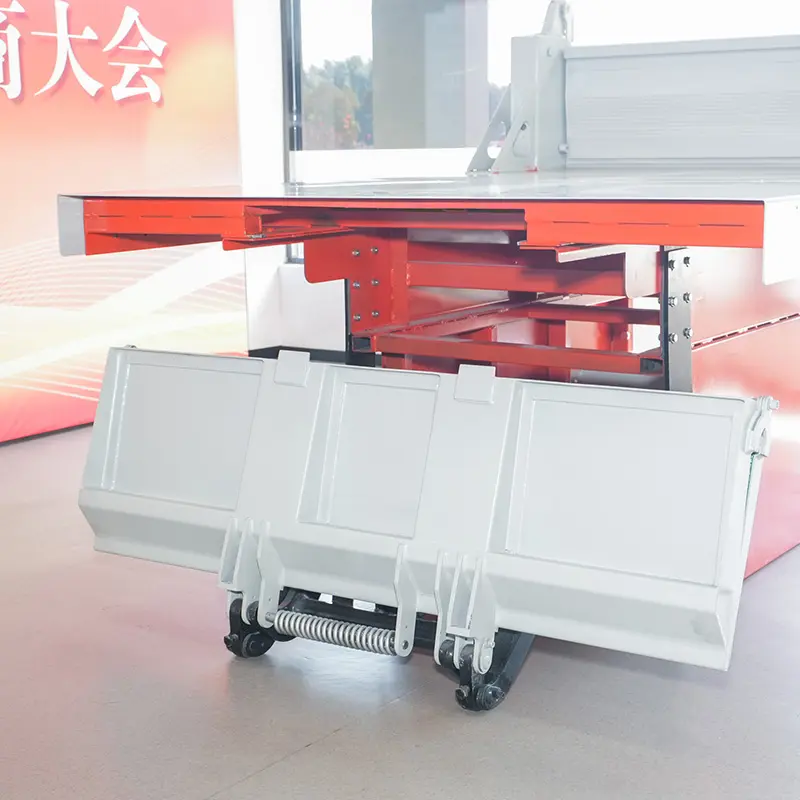
Tail lifts are hydraulic or electric devices that mount to the rear of a vehicle to raise and lower goods between ground level and the cargo deck. They improve ergonomics, reduce the risk of injury, and enable handling of varied cargo sizes without manual lifting. The two main configurations discussed here are retractable tail lifts, which fold or retract when not in use, and fixed tail lifts, which remain in their deployed or mounted position until removed or serviced.
- Deployment and storage
- Load capacity and lifting height
- Power requirements and efficiency
- Footprint and vehicle integration
- Maintenance and serviceability
Retractable tail lifts are designed for variable use. They collapse into the vehicle frame or a compact well when not in operation, reducing wind resistance and preserving payload space. Fixed tail lifts remain permanently attached in a deployed or stowed state, occupying space but offering immediate readiness for lifting tasks.
Retractable tail lifts excel in environments where vehicle size and aerodynamics impact fuel efficiency or where space is at a premium. The retractable mechanism allows the lift to be stowed away, often behind a protective housing, when not in use. This reduces exposure to weather, debris, and potential theft or vandalism. However, the retraction process adds a layer of mechanical complexity and requires regular maintenance to ensure smooth operation.
Fixed tail lifts prioritize simplicity and reliability. With fewer moving parts to retract, they generally offer robust performance in heavy-duty or high-usage contexts. The trade-off is a constant impact on the vehicle's rear profile and potential interference with loading dock workflows if the lift is always deployed or partially protruding.
- Retractable tail lifts: Typically optimized for a balance of capacity and compactness. Common ranges span from 500 kg to 1,500 kg (approximately 1,100 to 3,300 pounds), with lift heights tailored to standard dock levels and platform heights. Some models can reach higher when designed for heavier loads, but efficiency and cycle times may vary with weight.
- Fixed tail lifts: Often built for higher duty cycles and heavier payloads. Load capacities can extend beyond 2,000 kg (approximately 4,400 pounds) depending on model and configuration. Lift height is influenced by the platform design and the vehicle's own dimensions, enabling consistent operation in fleets that frequently handle heavy shipments.
When selecting between retractable and fixed, consider the typical cargo weight, frequency of use, and the dock height at your usual loading locations. A mismatch between lift capacity and your average loads can lead to slower cycles or increased wear.
- Retractable tail lifts: Power consumption correlates with lift cycles, with energy use peaking during raising and lowering. Modern retractable systems often feature efficient hydraulic or electric motors and regenerative components in some designs. The need to retract adds an energy overhead if the system is frequently switched on and off.
- Fixed tail lifts: These systems may draw power primarily during activation and benefit from simpler hydraulic or electric circuitry. In some cases, fixed lifts are integrated with vehicle electrical systems designed for high-duty operation, potentially providing steadier performance over long shifts.
Assess your operating profile: fleet turnover, shift length, and typical lift usage. If your fleet runs high-frequency, large-load operations across long routes, energy efficiency and motor durability become significant factors.
Retractable lifts are often favored for their better aerodynamics and reduced rear protrusion when not in use. This can contribute to improved fuel economy and reduced exposure to road spray or debris. The downside may include the need for precise alignment during retraction and potential clearance issues with low bridges or tight loading bays.
Fixed tail lifts contribute to a straightforward installation with fewer moving parts, which can simplify vehicle design and maintenance. However, their constant presence at the rear can affect aerodynamics, increasing drag and potentially reducing fuel efficiency, especially at highway speeds. For fleets prioritizing space and weight considerations, fixed lifts may impose practical constraints on rear door clearance and dock access.
Both configurations should meet essential safety standards, including overload protection, emergency lowering, anti-slip platforms, and clear status indicators. Retractable lifts often feature interlocks and automatic safety checks during deployment and retraction, reducing the risk of accidental operation. Fixed lifts rely on robust mechanical design and clear operating procedures to prevent injuries during routine use.
Operator training is critical for both types. A knowledgeable operator can maximize efficiency while minimizing risk by following load securing protocols, understanding manual overrides, and performing routine inspections.
- Retractable tail lifts: Regular inspection of hinge points, hydraulic cylinders, seals, and retraction mechanisms is essential. Debris and corrosion can impair movement, so preventative maintenance schedules should emphasize lubrication, seal replacement, and inspection of the retractable well housing. Downtime for retractable systems may be higher due to more complex components.
- Fixed tail lifts: Maintenance focuses on hydraulic or electric motors, pump units, seals, and platform integrity. With fewer moving parts, fixed lifts can offer higher uptime in some fleets, especially when backed by proactive service plans. Regular checks for wear on pins, bearings, and lubrication points are still necessary.
A well-planned maintenance program is crucial for both designs. Align service intervals with usage metrics, load profiles, and operating environments to minimize unplanned downtime.
Consider exposure to weather, dust, salt, and temperature fluctuations. Retractable tail lifts may have additional protective housings to shield components when stowed, but the retractable mechanism itself can be more susceptible to environmental wear if not properly sealed. Fixed tail lifts, while exposed to the elements at all times, can be designed with rugged seals and corrosion-resistant materials to withstand tough conditions, particularly in heavy-duty logistics or cold-chain sectors.
- Initial capital investment
- Installation complexity
- Maintenance and repair costs
- Downtime and productivity impact
- Resale value and lifecycle
Retractable tail lifts can entail higher upfront costs due to the complexity of the retraction mechanism and added protective enclosures. However, their benefits in aerodynamics, cargo space optimization, and rear safety can offset these costs over time for fleets prioritizing efficiency and urban operation.
Fixed tail lifts typically present lower initial costs and simpler installation. They may incur trade-offs in aerodynamics and potential rear space usage, but their durability and predictable maintenance can yield favorable total cost of ownership for customers with stable, long-term use patterns and less frequent dock variability.
- Urban delivery fleets with tight loading bays and fuel efficiency goals: Retractable tail lifts often provide advantages through improved aerodynamics and compact storage.
- Long-haul or high-volume distribution centers with consistent dock heights and predictable cargo profiles: Fixed tail lifts may offer superior uptime and capacity for heavy loads.
- Mixed operations with variable dock heights and diverse cargo: A hybrid approach or a carefully chosen retractable or fixed model designed for versatility could be the best fit.
Ensure that the chosen tail lift adheres to applicable safety and vehicle standards in your region. In many markets, tail lifts must meet specific certifications, such as CE marking in Europe or other national safety standards. Verify that the manufacturer provides thorough documentation, testing data, and installation support to ensure compliance and safety across the vehicle fleet.
To determine whether retractable or fixed tail lifts are best for your vehicle, perform a structured assessment based on the following criteria:
- Cargo profile: typical weight, dimensions, and handling requirements
- Dock environment: height, width, access challenges, and space constraints
- Vehicle design: rear door configuration, chassis strength, and compatibility
- Operational tempo: cycle times, uptime requirements, and shift length
- Total cost of ownership: initial investment, maintenance, downtime, and resale value
- Safety and compliance: local regulations and required certifications
Create a decision matrix that maps each criterion to a preferred option. This approach helps stakeholders visualize trade-offs and reach a consensus aligned with operational goals.
- Engage with a reputable tail lift manufacturer and certified install partner to ensure proper alignment and mounting.
- Plan for weight distribution and chassis reinforcement where needed to maintain vehicle performance and safety.
- Schedule regular functional tests, including load tests, emergency lowering, and inspection of hydraulic lines and seals.
- Document maintenance records and inspection results to support warranty coverage and future audits.
- Overlooking headroom: Ensure the dock height and platform range are compatible with your typical cargo to avoid awkward loading or unloading maneuvers.
- Underestimating downtime: Factor in service windows for maintenance and potential repairs, especially for fleets with tight delivery windows.
- Neglecting weather protection: In climates with extreme cold or wet conditions, ensure the lift components are adequately protected and heated when necessary.
- Bulk purchasing: Negotiating with manufacturers for fleet-wide installations can reduce unit costs.
- Standardization: Selecting a single lift model for most or all vehicles simplifies maintenance and training.
- Lifecycle planning: Align replacement cycles with vehicle depreciation schedules to maximize resale value.
Technology advances continue to shape tail lift design, including smarter control systems, improved energy efficiency, and modular components that simplify maintenance. When evaluating options, consider not only current needs but also anticipated future requirements, such as higher load capacities, longer lifespans, or integration with telematics and fleet management software. A well-chosen tail lift can remain a valuable asset across multiple vehicle platforms and use cases.

- What are the main benefits of retractable tail lifts?
Retractable tail lifts improve aerodynamics, protect the platform when not in use, and maximize cargo space. They offer flexibility for fleets operating in variable dock environments and urban settings.
- What are the main benefits of fixed tail lifts?
Fixed tail lifts deliver straightforward operation, higher potential uptime, and robustness for heavy-duty use. They are well-suited for fleets with predictable workflows and consistent loading needs.
- How does load capacity influence the choice between retractable and fixed tail lifts?
If your cargo weight frequently approaches the upper end of the lift's capacity, a fixed tail lift might be preferred for reliability and safety, whereas retractable models are suitable for moderate loads with space considerations.
- Are there maintenance differences I should expect?
Retractable lifts require attention to the retraction mechanism, seals, and moving parts, while fixed lifts emphasize motor, pump, and platform wear. Both need regular inspections and preventive maintenance.
- How do I assess total cost of ownership?
Consider initial cost, installation, maintenance, downtime, energy consumption, and resale value. Compare long-term operating expenses rather than upfront price alone.
- Can tail lifts be retrofitted to existing vehicles?
Yes, retrofits are possible with varying complexity depending on vehicle type and lift model. Consulting with a certified installer ensures proper integration and safety compliance.
- What safety features are most important?
Overload protection, emergency lowering, anti-slip surfaces, interlocks, and clear status indicators are essential. Ensure operators are trained and follow safety procedures.
- How does weather affect performance?
Weather affects hydraulic components and electronics. Choose models with weather-resistant housings and seals, and perform routine weather-related maintenance in extreme climates.
- Is retraction noise a concern?
High-quality retractable systems minimize noise through precision engineering and robust seals. If noise is a concern, specify noise benchmarks during procurement and select models with quiet operation modes.
- Which option is better for mixed-use fleets?
A carefully selected retractable lift with robust seals and modular components can offer flexibility, while a fixed lift with appropriate capacity can provide reliability for high-volume operations. A fleet-wide assessment will reveal the best compromise.
Both retractable and fixed tail lifts offer distinct advantages and fit different operating contexts. Retractable models excel in environments where space optimization, aerodynamics, and variable dock access are priorities. Fixed models shine in high-usage, heavy-load scenarios where durability and uptime are critical. A thorough assessment of cargo profiles, dock conditions, vehicle design, maintenance capabilities, and total cost of ownership will guide you to the right choice for your fleet.
Hot Tags: China, Global, OEM, private label, manufacturers, factory, suppliers, manufacturing company